
How to Plan Your Week Effectively: A Complete Guide to Better Time Management
Why Most Weekly Planning Fails
You start every week with good intentions and a long list of things to accomplish. By Friday, half of it is still undone and you’re not even sure where the time went. The problem usually isn’t a lack of hours — it’s the absence of a real system for weekly planning.
Effective weekly planning isn’t about writing a giant to-do list. It’s a deliberate process that connects your bigger goals to small, doable daily actions. In this guide, we’ll walk through a practical system you can start using this week.
To-Do List vs. Real Weekly Planning
Many people confuse the two. A to-do list is just a dump of everything on your mind. Real weekly planning includes:
- Clear priorities based on your monthly and yearly goals
- Tasks spread across specific days instead of crammed into one
- Built-in space for flexibility and the unexpected
- A weekly review to check what worked and what didn’t
Steps to Build a Weekly Planning System That Actually Works
1. Start With a Quick Review of Last Week
Before planning ahead, spend ten minutes looking back. What got done? What got pushed? Why? This short review gives you a realistic starting point instead of planning from scratch every time.
2. Pick Only Three Main Goals
One of the most common mistakes is trying to do everything in a single week. Instead, choose just three priorities — the ones that would actually move the needle if you finished them.
3. Spread Tasks Across the Week Strategically
Break each goal into smaller tasks and assign them to specific days. Save your higher-energy days for demanding work, and use lighter days for admin tasks and quick wins.
4. Leave Empty Space in Your Schedule
A fully packed calendar is a setup for failure. Keep at least 20% of your week unscheduled so you have room for the unexpected without derailing everything else.
5. Use One Consistent Planning Tool
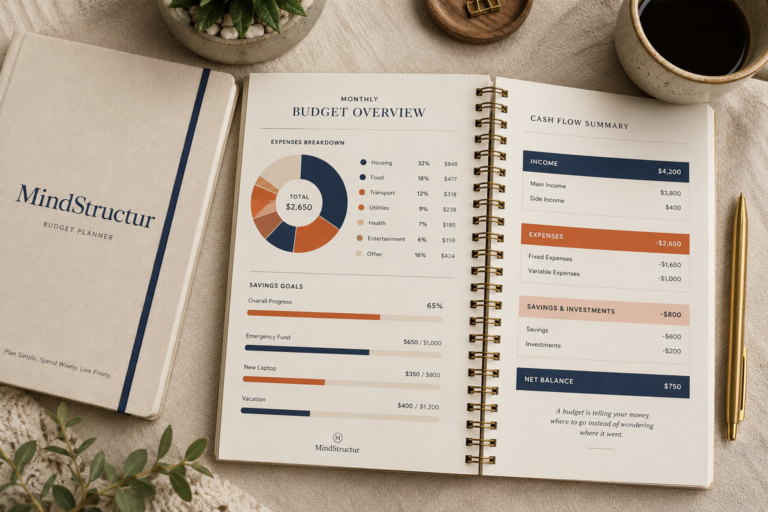
Whether it’s paper or digital, what matters most is sticking to the same system every week. Consistency builds the habit. A clean, structured layout — like the Weekly Planner from MindStructur — lets you see your entire week at a glance instead of scattering your thoughts across five different apps.
Bonus Tip: The Nightly Review Habit
At the end of each day, take five minutes to check what you completed and adjust tomorrow’s plan if needed. This small habit keeps your weekly plan alive and adaptable, instead of a rigid list you write once and forget.
Make Weekly Planning a Habit, Not a Hassle
Effective weekly planning is a skill, not a personality trait. Start small: review your week, pick three goals, and be realistic about how you spread your tasks. Over time, you’ll get more done with less stress and feel genuinely in control of your time.
If you want a tool that makes this system easy to follow, check out the Weekly Planner from MindStructur, designed to help you plan with clarity and simplicity.