How to Set Goals You’ll Actually Follow Through On
You’ve written the goal before. Probably more than once. “Get healthier.” “Be more productive.” “Save more money.” It felt good to write down — and by February, it was already forgotten.
The problem was never that you didn’t want it badly enough. It’s that most goals are set in a way that makes follow-through almost impossible from day one.
Why Most Goals Don’t Stick
They’re too vague to act on. “Get organized” isn’t a goal — it’s a feeling. Without a specific action attached to it, your brain has nothing concrete to actually do on a Tuesday morning.
They’re too big to see progress on. A goal that only “counts” when it’s 100% finished gives you nothing to feel good about along the way. No visible progress means no motivation to keep going.
They live in your head instead of in front of you. A goal you thought about once and never wrote down competes with everything else on your mind — and it usually loses within a week.
A Goal-Setting Method That Actually Works
Step 1: Make it specific
Turn “get healthier” into “walk 20 minutes, 4 days a week.” Specific goals give your brain a clear action instead of a vague feeling to chase.
Step 2: Break it into checkpoints
Instead of one big finish line, set checkpoints along the way — weekly or monthly markers you can actually hit and feel. Progress you can see is progress you stick with.
Step 3: Attach it to a system, not just motivation
Motivation fades. A system doesn’t. Decide when and where you’ll work on the goal, so it doesn’t depend on how inspired you feel that day.
Step 4: Track it somewhere visible
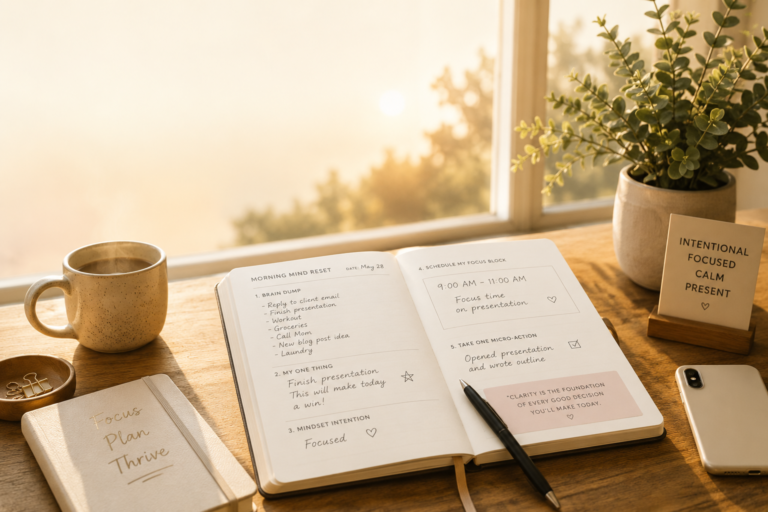
A goal tracked only in your memory quietly disappears. A goal tracked on paper — where you see it daily — stays real. This is the single biggest difference between people who follow through and people who don’t: not more discipline, just more visibility.
Step 5: Review and adjust, don’t abandon
When a goal stalls, most people quit it entirely. Instead, review what’s not working and adjust the plan — the goal itself is usually still worth keeping.
Why Writing It Down (Properly) Changes Everything
The checkpoint system above works far better with a structure built for it, rather than a random notes app or a blank page you have to design yourself every time.
If you want a ready-made structure for this, our 2026 Daily Productivity Planner & Habit Tracker is built around specific goals, visible checkpoints, and daily tracking — so follow-through becomes a habit instead of a hope.
And if your goals lean more toward long-term vision and mindset — not just daily tasks — our full collection of goal-setting and planning tools covers everything from vision boards to weekly systems, so you can pick the structure that actually fits how you think.