The Money Shame Spiral: Why Budgeting Feels Emotional (Not Just Financial)
You know you should check your bank account. You’ve known for three days. And every day you don’t, the dread gets a little heavier — until checking it feels worse than not knowing at all.
This is the money shame spiral: avoidance breeds anxiety, anxiety breeds more avoidance, and somewhere in the middle, budgeting stops being a task and starts being a source of guilt. If this sounds familiar, here’s the first thing worth knowing — it’s not a discipline problem. It’s an emotional one. And it responds to a very different kind of fix than “just track your spending.”
Why Budgeting Triggers Shame, Not Just Stress
Money is rarely just money. For most people, it’s tangled up with identity, self-worth, and comparison — which is exactly why a budgeting spreadsheet can feel more threatening than a to-do list ever would.
A few reasons the shame spiral takes hold:
- Money feels like a report card on your worth. Overspending doesn’t just feel like a math error — it can feel like proof you’re “bad with money,” which quietly becomes “bad, period.”
- Avoidance offers short-term relief. Not looking at your numbers removes the discomfort today, even though it makes the underlying problem worse tomorrow. This is a well-documented pattern in financial psychology — avoidance is a coping mechanism, not a character flaw.
- Comparison makes it worse. Seeing other people’s homes, trips, or “financial glow-ups” online adds a layer of shame that has nothing to do with your actual numbers.
- Traditional budgeting tools weren’t built for this. A spreadsheet full of red negative numbers reads like a scoreboard of failure, not a tool for clarity.
Recognizing this is the actual turning point — not because it excuses avoiding your budget, but because it tells you what kind of system will actually work: one built for emotional safety, not just accuracy.
How the Money Shame Spiral Works
The pattern usually looks like this:
- A stressful money moment happens — an overdraft, a big purchase, a bill you forgot about.
- Shame shows up, often disguised as “I should be better at this by now.”
- Avoidance kicks in — you stop opening the banking app, stop checking the budget, stop engaging.
- The problem grows quietly while you’re not looking.
- The next time you do look, it’s worse — which confirms the shame, and the cycle repeats.
The exit point isn’t “try harder to look at your numbers.” It’s breaking the emotional trigger at step 2, before avoidance has a chance to take over.
Breaking the Cycle: A Different Way to Budget
Here’s what tends to actually work, based on both financial coaching approaches and simple behavior-change principles:
1. Separate “checking in” from “judging yourself”
Before you open your budget, name it out loud (even mentally): “I’m just gathering information, not grading myself.” This sounds small, but it interrupts the shame response before it starts.
2. Use a visual system, not a wall of numbers
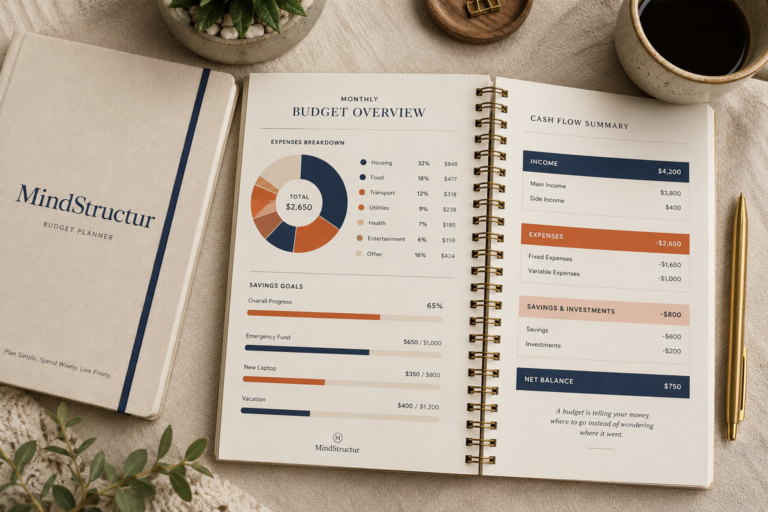
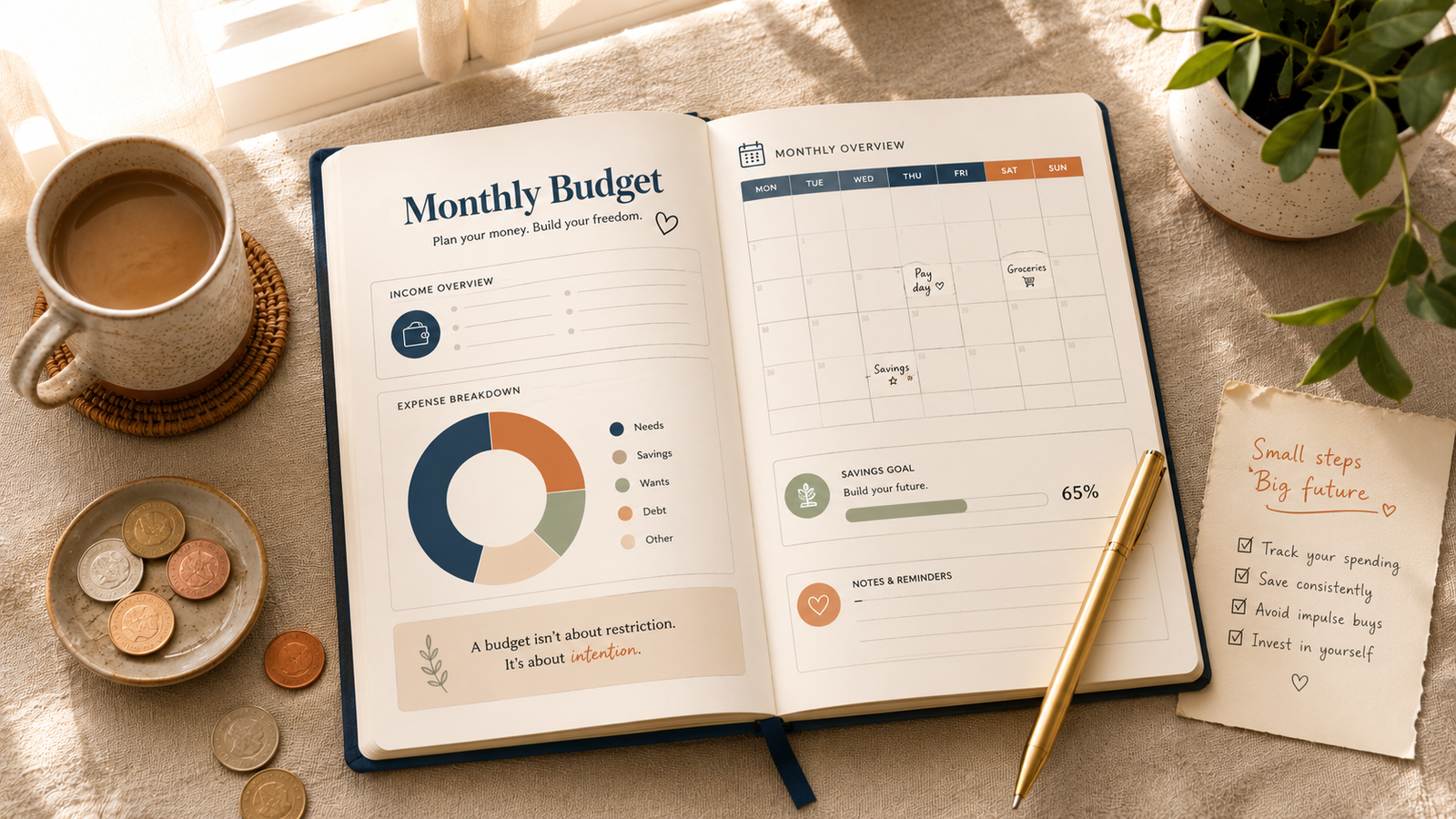
A budget that shows income, expenses, and savings goals as simple visual categories — rather than long rows of numbers — reduces the “report card” feeling considerably. You’re looking at a picture of your month, not a test score.
3. Celebrate the check-in, not just the outcome
The habit that actually breaks the spiral is looking regularly, regardless of what the numbers say. A budget system that makes it easy to log a quick weekly glance — not a full financial audit — makes that habit realistic to keep.
4. Build in a “no shame zone”
Give yourself one non-negotiable rule: no self-criticism during the budget check-in. Numbers are just information. Decisions about what to change can happen after, separately, with a clearer head.
5. Track progress, not perfection
Seeing a savings goal fill in gradually — even by a few dollars a week — does more for long-term consistency than any amount of guilt ever will. Progress you can see is progress you tend to repeat.
What This Looks Like in Practice
| Old pattern | Shame-breaking pattern |
|---|---|
| Avoid checking the budget for weeks | Quick weekly glance, no deep dive required |
| Long spreadsheet of every transaction | Simple visual overview by category |
| Self-criticism after overspending | Neutral “what happened, what’s next” review |
| All-or-nothing motivation | Small, visible savings progress |
| Budgeting alone, in secret | A system built for consistency, not perfection |
Budgeting Doesn’t Have to Feel Like a Punishment
The goal was never to be perfect with money. It was to feel less anxious about it. A budgeting system built around clarity — visual, simple, and judgment-free — makes it possible to actually see your money without the dread that usually comes with it. That’s the difference between a budget you check once and never open again, and one you actually keep using.
If you’re ready to check in with your money without the spreadsheet overwhelm or the shame spiral, the Digital Finance Planner is built around exactly this — a simple visual monthly overview, expense breakdown, and savings goal tracker, so checking in feels like clarity, not judgment.
And if the idea of saving still feels overwhelming, start smaller: the Money Saving Challenge Printable – $1 Savings Tracker (Save $100) breaks saving into small, visible wins — a gentle way to rebuild trust with your money before tackling a full budget.